From Examples to Experiments
Reproducible workflows in GeoClaw
Kyle Mandli
2026-03-20
How we actually use GeoClaw
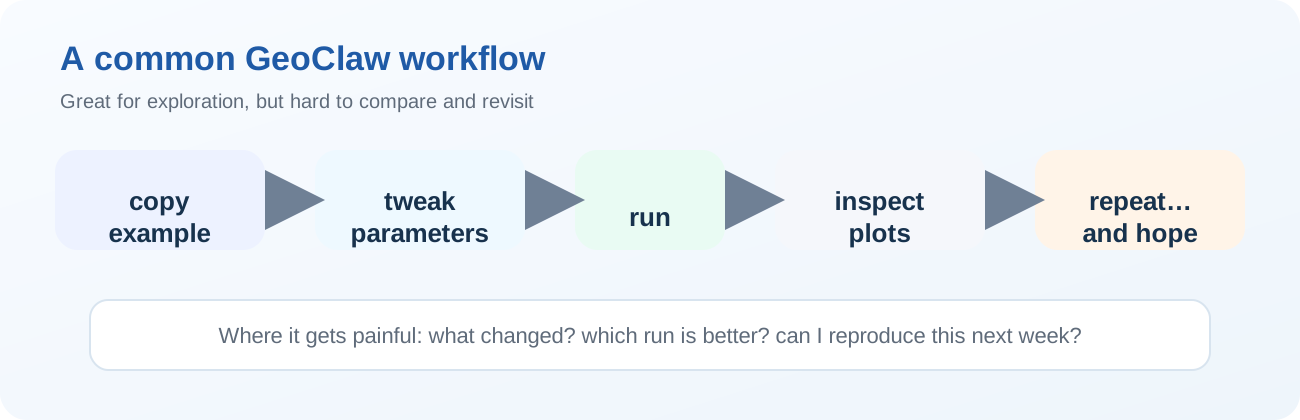
Where this gets painful
- Hard to reproduce results later
- Hard to compare runs systematically
- Easy to break something silently
What we actually want
- Re-run the same setup reliably
- Compare runs automatically
- Scale from 1 → many experiments
A better workflow
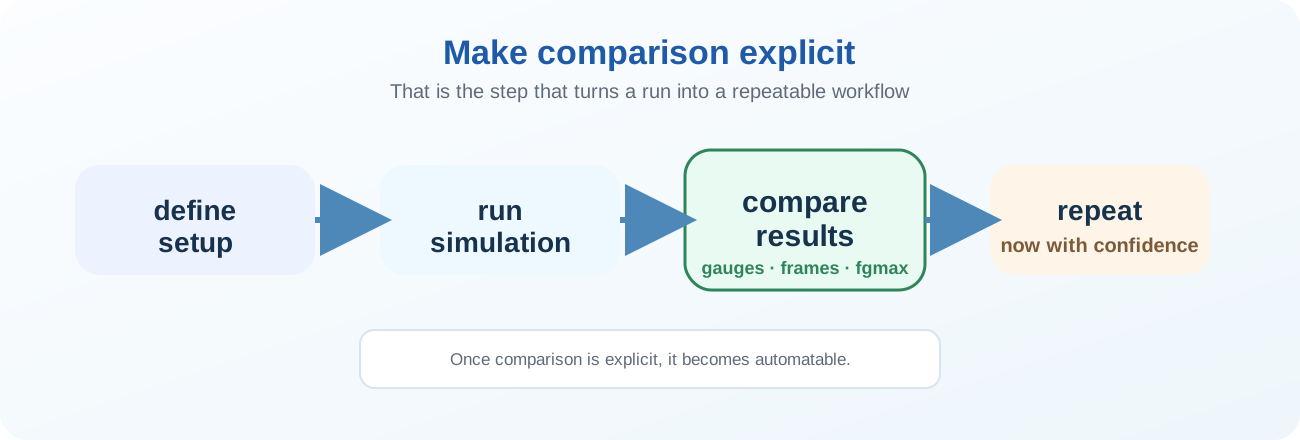
A simple idea
Treat simulation runs as repeatable checks
- Define a setup
- Run it
- Compare to a reference
- Let
pytestorganize the loop
A GeoClaw test in practice
- same GeoClaw workflow
- now repeatable and reusable
Example: bowl-slosh
- generated topography
- one gauge
- one fgmax grid
- compares outputs you actually care about
Parameterization: Hurricane Ike
- same physical problem
- different grids / AMR settings
- fast default + slower, higher-fidelity run
This is for users too
This is not about forcing everyone into developer-style tests.
- It helps you rerun cases cleanly
- It helps you compare outputs you already care about
- It gives you a path from one example to many related experiments
From tests to workflows
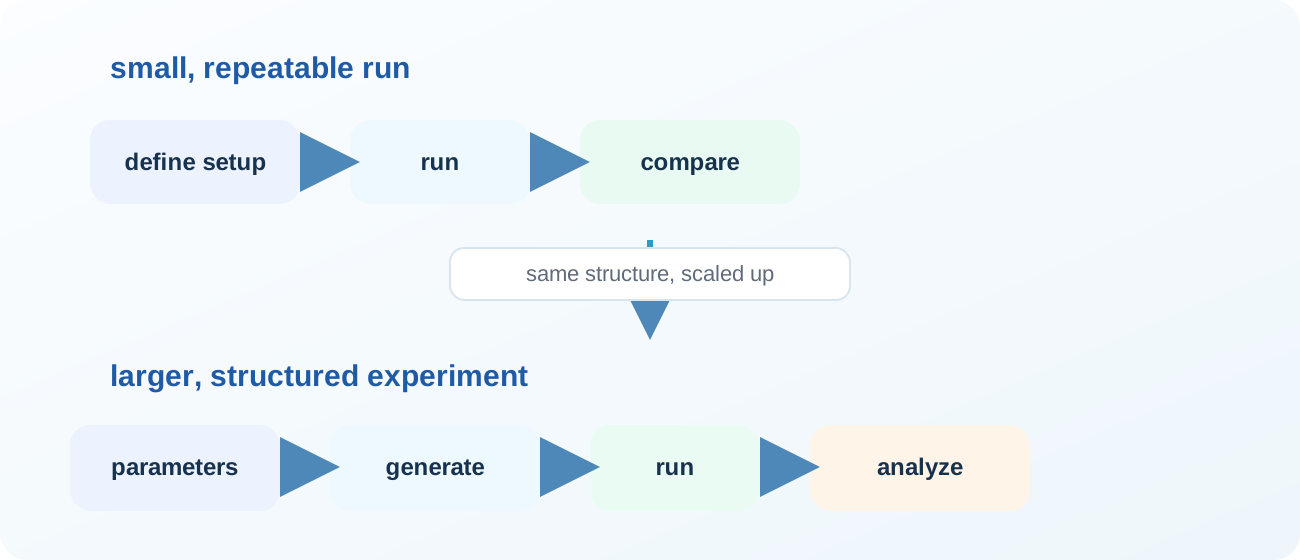
- synthetic topography and forcing
- controlled scenarios in
surge-examples/synthetic - larger workflow automation in
surge-examples/auto_workflow - same structure, just scaled up
Takeaways
- Start from an example you already trust
- Make the run / compare loop repeatable
- Parameterize one thing first
- Grow into a workflow only when it helps
Pointers
- Synthetic scenarios: https://github.com/mandli/surge-examples/tree/main/synthetic
- Auto workflow: https://github.com/mandli/surge-examples/tree/main/auto_workflow
- Testing refactor pull requests:
- Workshop: https://www.clawpack.org/geoclaw-users-2026/
GeoClaw Workshop 2026